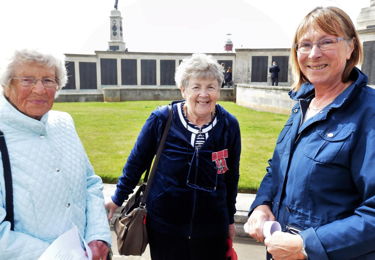
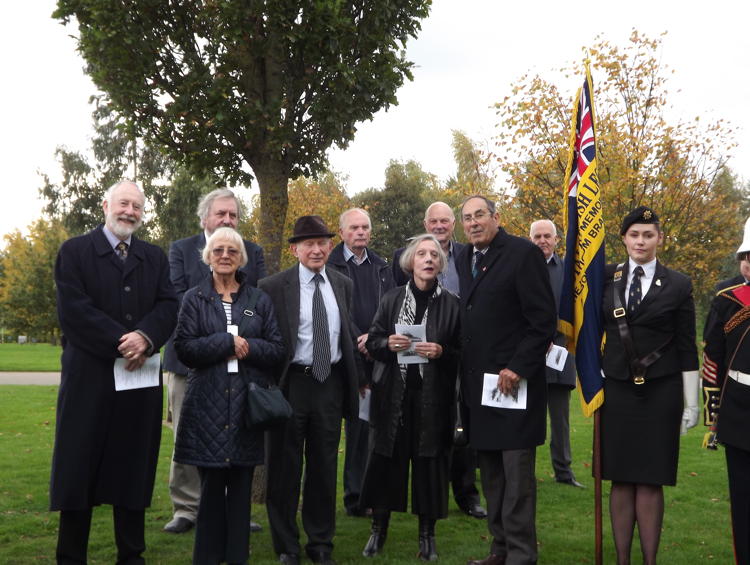
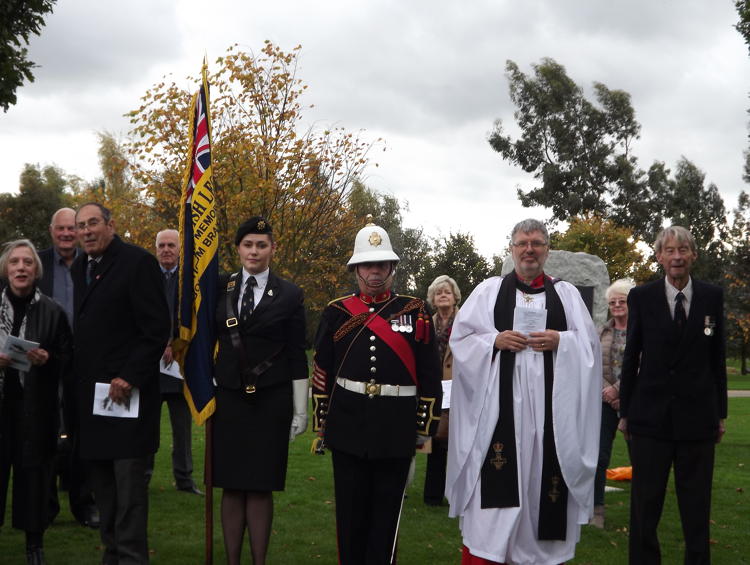
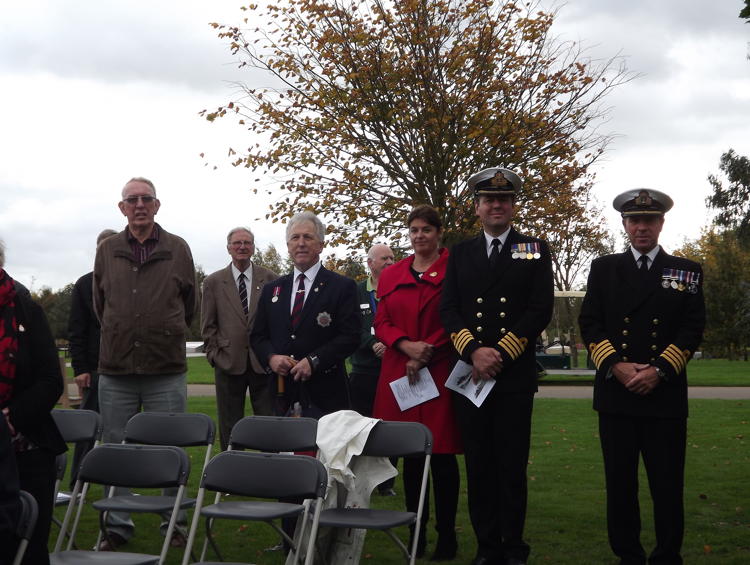
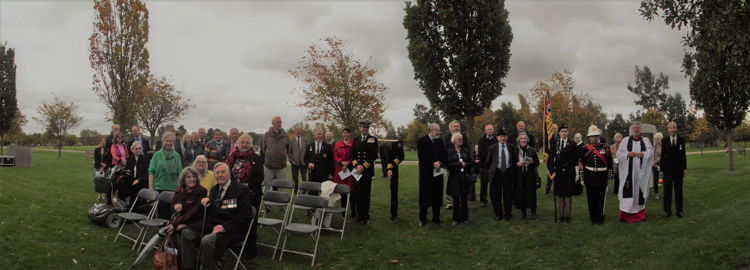
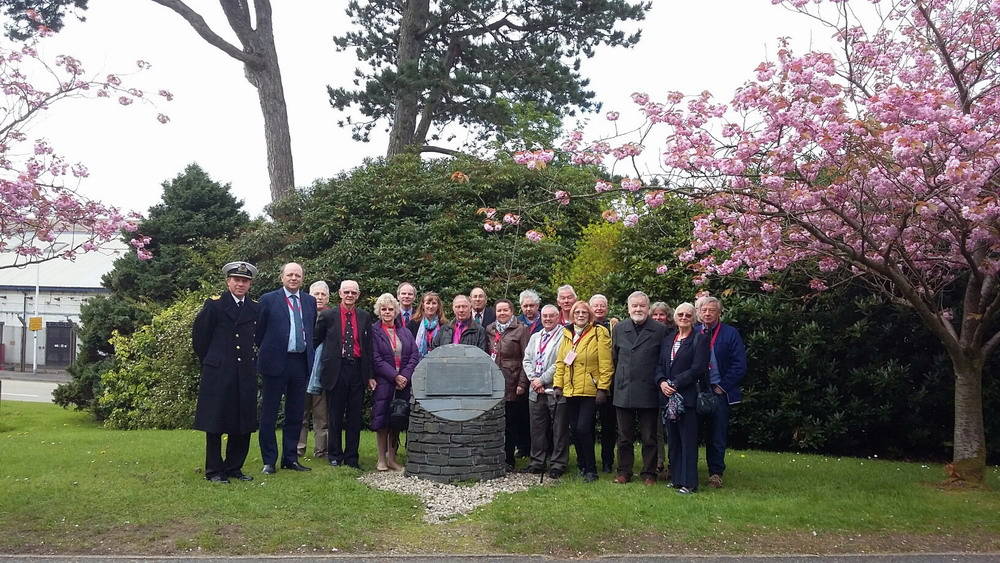
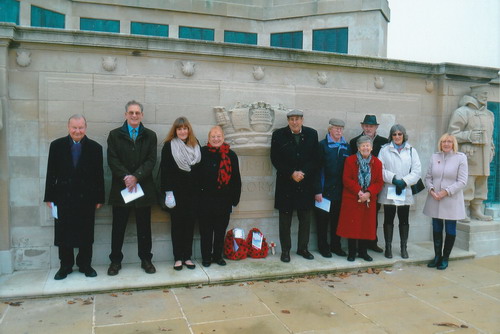
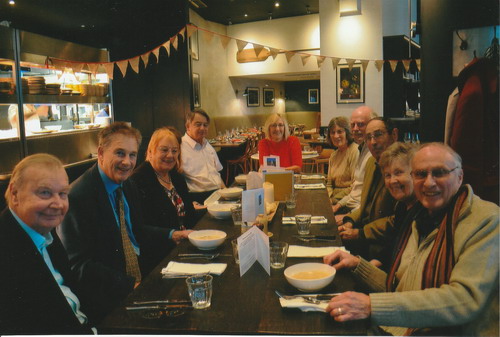
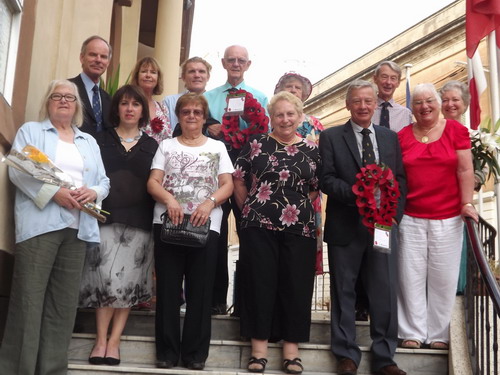
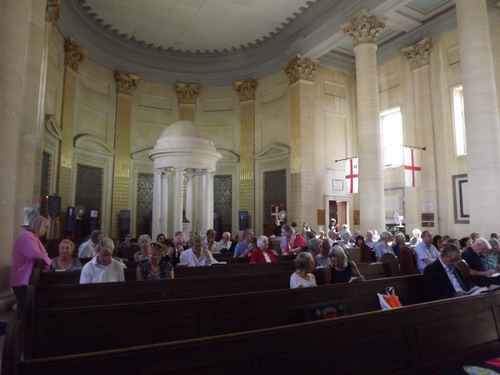
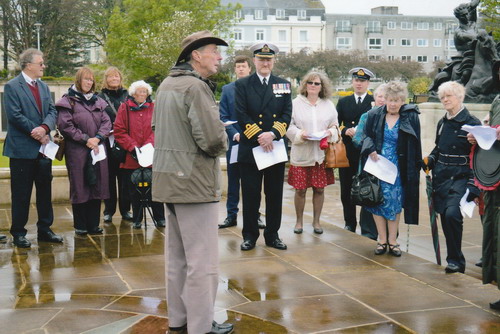
EVENTS IN 2024 Thursday 19th December 2024 - Commemoration at the Neptune and Kandahar Memorial at the National Arboretum, Alrewas Traditionally on the anniversary of the mining of HM Ships Neptune and Kandahar, commemorations take place for (the now former) members of the Neptune Association, friends, relatives and others. A commemoration took place at 12 noon at the Memorial at The National Memorial Arboretum, Alrewas. 11 people gathered in the Arboretum cafeteria beforehand to catch up, before heading to the Memorial for a Service of Remembrance led by Paul Chilvers.
Monday 5th August 2024 - Unveiling of the Force K Seascape Memorial at Faslane Members of the Neptune Association had been cordially invited to HM Naval Base Clyde at Faslane, the current holder of the HMS Neptune name for the unveiling of this extraordinary mural on a prominent wall within the base. The mural is the inspiration of the theb Base Executive Officer, Commander Peter Noblett, who has represented the base at the Association's last two AGMs at Alrewas and commissioned local artist, Barry "the Cat" Jenkins to render it. It measures fifty metres long and two metres high and depicts the six ships of Force K at sea. In many ways, this represented the final event of the Neptune Association as the procedures to wind up the Association were completed very soon after.
EVENTS IN 2023 Tuesday 19th December 2023 - Commemoration at the Neptune and Kandahar Memorial at the National Arboretum, Alrewas Traditionally on the anniversary of the mining of HM Ships Neptune and Kandahar, commemorations take place at several sites for members, friends, relatives and others. A commemoration took place at 12 noon at the Association's Memorial at The National Memorial Arboretum, Alrewas. The day was cold and wet but a group of four assermbled for a service of remembrance led by members Paul Chilvers accompanied by his wife Sandra. Saturday 14th October 2023 - 21st AGM at the National Memorial Arboretum, Alrewas The 2023 Annual General Meeting of the Association was held on Saturday 14th October at the National Memorial Arboretum with a Service of Remembrance at the Neptune Memorial. At the meeting the 28 members attending voted unanimously for a resolution previously circulated by the Executive Committee to wind up the Association after over 20 years and the achievement of all its declared objectives.
EVENTS IN 2022 Monday 19th December 2022 - Commemorations at the Southsea Naval Memorial and at the Neptune and Kandahar Memorial at the National Arboretum, Alrewas Traditionally on the anniversary of the mining of HM Ships Neptune and Kandahar, commemorations take place at these sites for members, friends, relatives and others. Due to a current health issue, it was been impossible for Mrs Pittman-Corner to organise a formal commemoration at Southsea this year. Regular attenders were been notified but obviously some members may have gathered for private remembrance themselves. A commemoration also took place at 12 noon at the Association's Memorial at The National Memorial Arboretum, Alrewas. Members gathered in the Arboretum cafeteria beforehand to catch up, with a service of remembrance led by member Paul Chilvers as has been traditional in recent years.
Saturday 8th October 2022 - 20th AGM at the National Memorial Arboretum, Alrewas As last year, the day started with members meeting at our memorial at 1130 am for our Remembrance Service which was led again by good friend and supporter of the Association, the Reverend Vic van den Bergh, Chaplain to the National Memorial Arboretum. The service included a reading of Psalm 46 from Captain Nicholas Gibbons, RN, CO of HMS Neptune, Captain of the Base, HMNB Clyde. This was followed immediately at 1215 by the business of the AGM accompanied by tea and coffee. Presentations this year were limited to an update from Guest of Honour Captain Gibbons on the latest news of the present-day Neptune at HMNB Clyde at Faslane. Disappointingly and unusually, the Association's President, Nick Wright and his wife, Gerry, were unable to be with us this year but Chairman John McGregor read a message from Nick to the members. The hot buffet lunch and subsequent lengthy opportunity for members to catch up with each other for the rest of the afternoon were very welcome and universally agreed a resounding success. Thanks were voted to Mrs Christine Pittman-Corner who had arranged the event and happily was able to attend, this year. EVENTS IN 2021
Sunday 19th December 2021 - 80 years since HM Ships Neptune and Kandahar mined Three gatherings to mark the Anniversary of the loss of HM ships Neptune and Kandahar were held in the UK this year, being the 80th year since the tragedy. On Sunday 19 December 2021 a Service of Remembrance and wreath laying took place at Southsea Naval Memorial conducted by the Rev Margaret Hay.
Attending were:
Adrian Fewins (nephew of ERA Arthur Fewins);
Barbara Howard (daughter of Stoker William White);
Tom Howard (grandson of Stoker William White) & two family friends;
Richard McGregor (son of Paymaster Commander John McGregor);
Caroline and Eliza Meredith (nieces of Surgeon Lieutenant. Cameron Fraser);
Valerie Pennifer (daughter of Stoker Edmund Lidbury, HMS Kandahar) and her husband Peter and daughter Carrie.
Christine Pittman-Corner (sister-in-law R.M. Arthur Corner);
Geoff de Silva (grandson of Engineer Commander Arthur Holt);
Harry Waterworth (son of Ordinary Seaman Harry Waterworth & nephew of Able Seaman Clifford Waterworth) & his wife Wyn;
The Last Post and Reveille werer sound by former Royal Marine John Yates,
Also on Sunday 19 December 2021 a Service of Remembrance took place at the Association’s Memorial at the National Memorial Arboretum, Alrewas led by member Paul Chilvers.
Attending were:
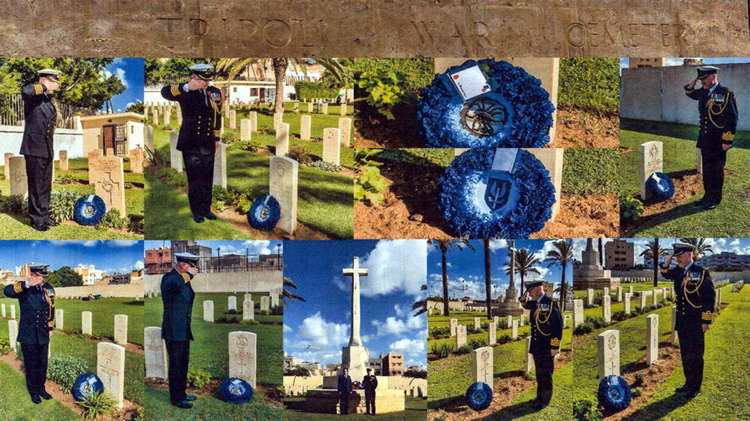
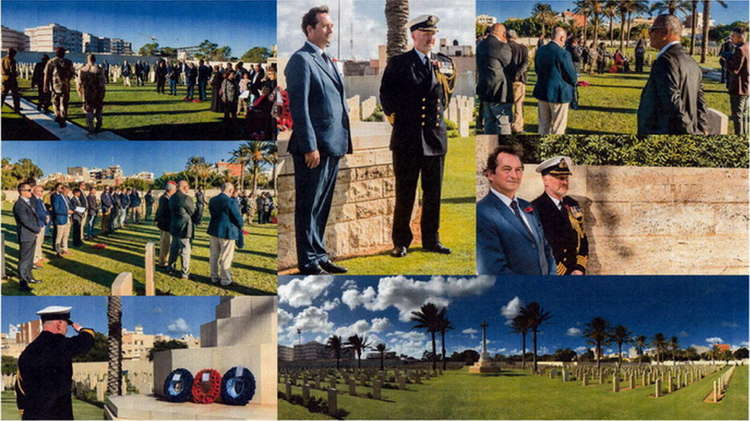
Paul Chilvers (son of Canteen Manager Cyrus Chilvers HMS Kandahar) & his wife Sandra; Rorie & Kathy Grieve (friends of the family of Captain Rory C O’Conor) ; Mike Harbon (great nephew of Chief Yeoman Reg Harbon); Richard Hickman (great nephew of Boy Seaman Arthur Brough) & his young daughter Emily; Judith Harbon (niece Chief Yeoman Reg Harbon); Sue Rawlings (niece of Ordinary Seaman William Henry Mason) with her husband Steve & Neil Rawlings; Ian & Jill Taylor (representing Sarah Thorpe & Maureen Benar, niece and great niece of Able Seaman Eddie Vasey); Bill Wilcock (nephew of Marine Joseph Wilcock) & his wife Jane; Brian Wilson (nephew of ERA Stanley Wilson HMS Kandahar). On Friday 17 December 2021 (two days earlier due to term dates) a Service of Remembrance was conducted at HM Naval Base Faslane (the present-day HMS Neptune) stream-lined in view of the resurgence of the Pandemic. It was, nevertheless, a moving and fitting tribute with young sailors from the current HMS Neptune Unit Personnel Office reciting the account of the tragedy and Commodore Bob Anstey, Naval Base Commander, laying the wreath. The last post was played by 2 i/c 43 Commando. In New Zealand, an 80th Neptune commemoration service outside the gates of Philomel Naval Base in Devonport, Auckland took place early on 19 December 2021 in beautiful sunshine. Approximately 20 white uniformed personnel including the Chief of Navy, the Ngapona Association Chaplain, the Chief RNZ Navy Chaplain, a lone piper, a Navy trumpeter and two nieces of two Neptune casualties (Able Seamen Norman Cook and John Victor Ross) were in attendance. Amidst very tight national Covid regulations in force at the time, the short but poignant service included prayers, an account of the loss of HMS Neptune, a poem "Sea Fever" by John Masefield read by the Chief of Navy, a Bible reading, a reflection, the Last Post, the reading of The Ode, the Reveille and a final blessing. With the very positive encouragement of Navy Museum staff, two wreaths were able to be laid at the National Navy Museum in Devonport on the same day. Also in New Zealand, a special Anniversary exhibition planned at the Navy Museum at Devonport on HMS Neptune, due to open the weekend of the Anniversary, had to be delayed due to Covid-19 restrictions and is believed to have opened on 22 February 2022, entitled “Neptune Calling” and based around Arch Curry’s recordings of New Zealand crew members from Alexandria on 13 November 1941. Saturday 16th October 2021 - 19th AGM at the National Memorial Arboretum, Alrewas 19 December 2021 saw the 80th Anniversary of the loss of HMS Neptune and HMS Kandahar. To commemorate and remember all our relatives who lost their lives the AGM and meeting were in a different format this year. We are a unique association and over the years we have become like a family so, to be able to spend more time together, it was decided to have a hot buffet meal served at lunch-time allowing time for members to socialise during the afternoon. The day started earlier than in previous years with members meeting at our memorial at 1130 am for our Remembrance Service which was led by the Reverend Vic van den Bergh, Chaplain to the National Memorial Arboretum including a reading of the Beatitudes from Saint Matthew's Gospel from Captain Nicholas Gibbons, RN, CO of HMS Neptune, Captain of the Base, HMNB Clyde. This was followed immediately at 1215 by the business of the AGM accompanied by tea and coffee. Presentations this year were limited to an update from Guest of Honour Captain Gibbons on the latest news of the present-day Neptune at HMNB Clyde at Faslane. The hot buffet lunch and subsequent lengthy opportunity (in the brief pandemic lull) for members to catch up with each other for the rest of the afternoon were very welcome and universally agreed a resounding success. Thanks were voted to Mrs Christine Pittman-Corner who had arranged the event but then sadly been unable to attend. Saturday 15th May 2021 - Visit to Bletchley Park For a second year the pandemic sabotaged plans for a member's meeting at Bletchley on May 15th so plans have been abandoned for the present. Many thanks again to Valerie for her planning, her information in the newsletter and her interaction with the Bletchley staff. Again all those who had booked and paid for the meeting received refunds. EVENTS IN 2020 Saturday 9th May 2020 - Visit to Bletchley Park (coinciding with VE Day) After discussions with Valerie it was decided that the member's meeting at Bletchley on May 9th will have to be postponed until the current Corona virus chaos has been resolved. Many thanks to Valerie for her planning, her information in the newsletter and her interaction with the Bletchley staff. What a shame! Those who had booked in already were recompensed. Saturday 17th October 2020 - 18th AGM Under the restrictions due to the Covid-19 Virus, it was not be possible to hold the AGM at Alrewas as originally announced and planned. The necessary Charity legal activities were carried out and communicated via the internet or paper with members. It was disappointing not to have an opportunity for members to meet in 2020, especially as the Bletchley visit was also a casualty of the the Covid Pandemic but we hope for renewed personal contact to be resumed before the 2021 AGM. EVENTS IN 2019 Thursday 19th December 2019 - Commemorations at the Southsea Naval Memorial and at the Neptune and Kandahar Memorial at the National Arboretum, Alrewas As is traditional on the anniversary of the mining of HM Ships Neptune and Kandahar, commemorations took place at these sites for members, friends, relatives and others. The Southsea commemoration took place at the Naval Memorial at 12 noon with lunch afterwards, details from Christine Corner at 0203 719 5188 or 0779 174 8178. The Alrewas commemoration took place at 12 noon at the Association's Memorial, members gathered in the Arboretum cafeteria beforehand to catch up, details from Paul Chilvers at pandschilvers31@btinternet.com or 0777 416 4413. Friday 8th November 2019 - Remembrance Service in Tripoli Captain David Robertson Defence Attaché for the UK in Libya sent this message. David was the Hydrographer when Enterprise identified Neptune’s wreck in March 2016. “We conducted our commemorative service at the CWGC site in Tripoli on Friday 8 Nov 2019. About 55 people turned up to pay their respects, which is a great number considering that Tripoli has been under attack since 4 Apr 2019. Beside me is Nicholas Hopton the British Ambassador to Libya Even the Special Representative to the UN Secretary General Dr Ghassan Salame was there. As I walked through the cemetery here, now my 6th visit or so, I spotted these two graves – I thought that you would like to know that we had paid our respects – and will continue to do so. Regards,David C Robertson, Capt RN”
Commemoration service at the CWGC site in Tripoli on Friday 8 Nov 2019
Saturday October 19th 2019 - 17th AGM at the National Memorial Arboretum, Alrewas 2019’s AGM was held at the National Arboretum, Alrewas on Saturday 19th October. A service was conducted at our Neptune and Kandahar Memorial at 1200, by the Reverend Vic Van den Bergh, the resident Padre at Alrewas, with a bugler and standard bearer in attendance. Then members had the opportunity to have lunch in the Visitor Centre Cafe, catching up with friends old and new, before a member's meeting in the Founder’s room at 1330. Our first guest speaker was Captain Derek Rae the Hydrographer of the Navy who gave a description of progress and the limited future prospects with surveying Neptune’s wreck. The second speaker was Captain Nick Gibbons Captain of HMS Neptune, the Clyde Naval Base since May 2019, and who updated members on growth and developments at Faslane as it becomes the UK's sole submarine base. The formal business of the AGM followed. To encourage attendance, there was no charge for the day, the cost of room hire being borne from Association funds. Saturday 27th April 2019 - Portsmouth Members' Meeting A highly successful member’s meeting was held at the D-Day Museum in Southsea on 27th April. Members and guests first assembled at the Naval Memorial at 1100 for a service conducted by Rev’d Margaret whilst David Harding a Royal Marine bugler sounded the Alert and Last Post which all added to the occasion. Following the service there was a short walk to the D-Day Museum where tea and coffee were served. We then listened to a fascinating presentation by Norman Brice, a volunteer from the Commonwealth War Graves Commission who described the work of the CWGC, how it was founded soon after WW1 and how it is funded. He had arranged to have photos taken of the Neptune Graves in Tripoli just 6 days before our meeting and it was very heartening to see that they remain in excellent condition and are beautifully cared for in spite of the ongoing problems in Libya. We presented him with a copy of Minefield 2nd edition and this was followed by a light buffet lunch. All then took the opportunity to walk around the Museum and to inspect the D-Day tapestries. There was no charge for the event and costs which included hiring the bugler and buying wreaths for Neptune and Kandahar were borne by the Association We are most grateful to Christine Pitman-Corner for her impeccable organisation. EVENTS IN 2018 Wednesday 19 December 2018 - Commemorations at the Southsea Naval Memorial and at the Neptune and Kandahar Memorial at the National Arboretum, Alrewas As is traditional on the anniversary of the mining of HM Ships Neptune and Kandahar, commemorations took place at these sites for members, friends, relatives and others. The Southsea commemoration took place at the Naval Memorial at 12 noon with lunch afterwards, details from Christine Corner at 0203 719 5188 or 0779 174 8178. The Alrewas commemoration took place at 11 am at the Association's Memorial. Saturday October 13th 2018 - 16th AGM at the National Memorial Arboretum, Alrewas 2018’s AGM was held at the National Arboretum, Alrewas on Saturday 13th October. A service was conducted at our Neptune and Kandahar Memorial at 1200, by the Reverend Vic Van den Bergh, the resident Padre at Alrewas, with a bugler and standard bearer in attendance. Then members had the opportunity to have lunch in the Visitor Centre Cafe, catching up with friends old and new, before a member's meeting in the Founder’s room at 1330. Our first guest speaker was Captain Craig Mearns who has been Captain of HMS Neptune, the Clyde Naval Base since May 2015, and who updated members on growth and developments at Faslane as it becomes the UK's sole submarine base. Commander Karen Dalton-Fyfe (from the staff of Captain Gary Hesling the Hydrographer of the Navy) then gave a description of progress and prospects with surveying Neptune’s wreck. The formal business of the AGM followed. To encourage attendance, there was no charge for the day, the cost of room hire being borne from Association funds.
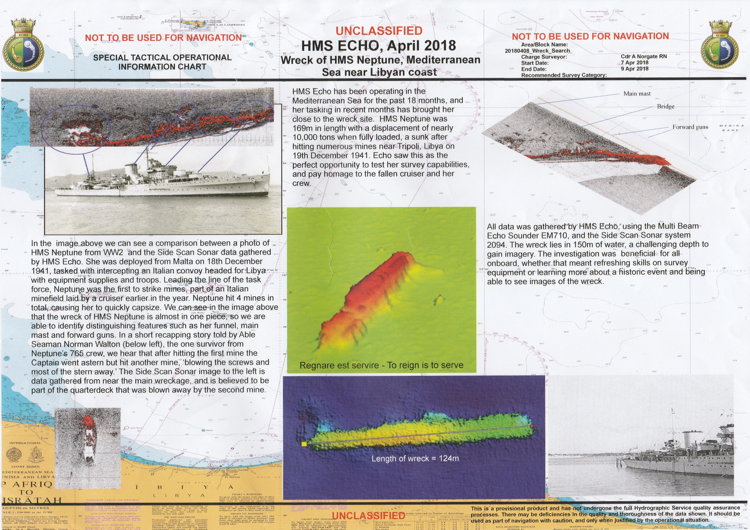
Friday 18th May 2018 - Members' Meeting at PortsmouthFor the second time in 3 years the Association returned to Plymouth in May. The committee considered this was appropriate since successive Hydrographers have been so supportive in searching for Neptune. We held a service and wreath-laying at the Royal Naval Memorial on the Hoe at Plymouth at 10.45 am on Friday, 18th May, to honour the memory of those who died in the two ships, Neptune and Kandahar. Immediatly before this we were invited to Faslane to attend the 50th Anniversary of the opening of the Base. My summary of these recent Neptune Association events was: At Faslane on May 10th we were represented by Rorie Grieve and his wife Kathy, Maureen Hayhurst and her son Simon and Alan Armstrong and his wife Fiona. Alan's father had written the wonderful account of Kandahar's last 36 hours which went down so well in the last newsletter. Rorie emphaised that the Neptune Association was treated excellently both at the lunch, the afternoon demonstrations of the Base activities and at the evening dinner and he summed it up by describing the whole day as "stunning". They all met the First Sea Lord Admiral Sir Philip Jones who encouraged Rorie to tell me to keep pushing the Hydrographer to investigate further surveys of the Neptune wreck and in due course to find Kandahar's wreck.
At Plymouth on May 13th the service in front of the War Memorial was excellent with the Reverend Warland presiding and Lieutenant Commander Tom Becker from HMS Echo in uniform and medals as the guest of honour. Also present were a fine bugler from the Devonport volunteer band and three standard bearers. The Neptune and Kandahar wreaths were laid by Thomas Howard grandson of Stoker William White and Liz Dean niece of Leading Seaman Cyril Hambly George Medal. After the service we gathered in the Duke of Cornwall Hotel for a presentation by Lt Cdr Tom Becker. He described the migrant support operation under an Italian Admiral which operates up to 75 miles off the Libyan coast and since February Echo has picked up 6000 migrants and taken them to Sicily. The Italian Admiral had given Echo permission to take a week off to do some surveying of Neptune's wreck. With Echo's total crew of 44 sometimes there have been over 60 migrants being fed, interviewed and processed on their landing deck. Each migrant is interviewed to determine where he or she came from and the documents they held (if any). The interviews were conducted in english but two loan officers in Echo's crew from Bahrain helped with the muslim language. The migrants come from many parts of black africa but also from Egypt, Pakistan, Afghanistan, Ethiopia and many other countries and some fleeing the war zones in South Sudan.
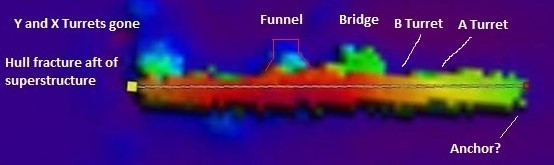
I was touched by the fact that in Echo they really enjoyed performing their proper role of surveying for a week rather than just picking up migrants and that each night every member of the surveying department came to the bridge to see what had been going on during the day. On conclusion Echo held a service over Neptune's wreck attended by every member of her ships company. The main gains from Echo's work were to analyse the devastation at the after end of Neptune's superstructure and to find and measure the lump of wreckage 500 metres away to the west proving that this was indeed the other quarter of Neptune's wreck broken off when she hit the fourth mine and broke her back. Neptune lies on her port side and the devastation at the after end of her superstructure where she fractured is clearly seen. Tom Becker said that since the wreck is comparatively deep although in less than her full length she is in complete darkness so photographs cannot be taken. The surveys were done by towing an array over the relevant wreck areas.
Tom Becker was presented with a Neptune crest, three parchment scolls in appreciation for himself, Commander Andrew Norgate Echo's Captain and for her ships company and a copy of Minefield with its second supplement. Many thanks are due to Christine Corner for organisiing the Plymouth event and the lunch which followed.
This was followed by a meeting and buffet lunch at the Duke of Cornwall Hotel, Millbay Road, Plymouth PL1 3LG. Members were asked for £15 per head as a contribution to the hire of the room and the cost of the lunch. The remaining costs were borne by the Association, which included hiring a bugler and wreaths for Neptune and Kandahar. There was no charge for the service on the Hoe. Those attending had to buy their own drinks.
Surveys by HMS Echo April 18 towing multiscan and sidescan arrays
Lt Cdr Tom Becker of HMS Echo presents survey results
Guests at the Plymouth Meeting
Guests at the Plymouth Meeting
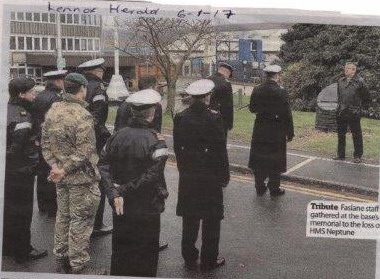
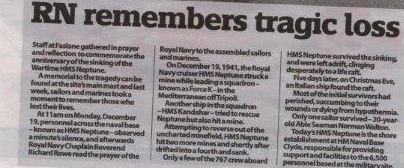
EVENTS IN 2017 19th December 2017 - 76th Commemorations at the Southsea Naval Memorial, at the Neptune and Kandahar Memorial at the National Arboretum, Alrewas and at HMS Neptune Faslane Commemorations were held at these sites for members, friends or relatives who wished to attend. The only photo was of the 7 who went to the Southsea memorial.
Saturday 14th October 2017 - 15th AGM at the National Memorial Arboretum, Alrewas 2017's AGM was held for the sixth consecutive year, at the National Memorial Arboretum, Alrewas on Saturday 14th October. Over 40 members and friends gathered for a service of remembrance with wreath laying at our Neptune and Kandahar Memorial at 12:00 noon. The service was conducted by the Association Chaplain Archdeacon John Green. Guests of Honour were Captain Gary Hesling who attended with his wife Elizabeth and Captain Craig Mearns the Commanding Officer of HMS Neptune, the Clyde Naval Base at Faslane. The oldest member attending was John Oliver aged 92 the brother of Neptune casualty Leading Seaman Thomas Oliver.
After the service, attendees had the opportunity to catch up with each others' news over lunch. The formal meeting was held in the Founder's Room at 13:30. The Association President Commander Nick Wright started the meeting by paying tribute to the Association’s Chairman for all he has done over the past years to discover the facts concerning the loss of HMS Neptune, to locate its wreck and to commemorate those who died on Neptune and Kandahar. He also announced that the committee had made Valerie Pennifer a Vice-President of the Association, a role which Valerie said that she was honoured to accept and said she would continue to do whatever she could to help the Association.
Captain Gary Hesling, Hydrographer of the Navy updated us on the latest news of the search for HMS Neptune off Tripoli. He reiterated that most of the wreck of HMS Neptune had been found by the RN Survey ship HMS Enterprise, but the precise location will not be released. Suffice to say that she lies outside Libyan territorial waters some miles south of the official Admiralty position. This remarkable news contributes to explaining exactly what happened after she hit the 4th mine and why the casualty list was so very high. He described the NATO force now led by a French Admiral in the migrant operation off the Libyan coast. It included ships from six countries and explained the two main areas from where the migrants left Libya – Sabratha to the west and Misurata to the east. He stated that HMS Echo which had undergone a short refit in Devonport was on her way back to the Med. He was reasonably confident that she would conduct further surveys during the next few months.
Captain Mearns who has commanded HMS Neptune, the Clyde Naval Base since May 2015 described what is happening in Faslane and the modest likely impact of the scottish political scene on Faslane in the future considering the massive benefit to the Scottish economy of employing so many at the Base with so many more of the surrounding population depending on it. He covered the arrival in Portsmouth of HMS Queen Elizabeth after her sea trials and his optimism for the future of the Royal Navy. He mentioned the prospects of deploying the F15B and other aircraft despite gloomy forecasts. He also mentioned the successful Faslane involvement in the Edinburgh tattoo.
The AGM The Chairman welcomed members to the Fifteenth Annual General Meeting of the Neptune Association. He thanked the President and the guest speakers for their contributions. He stated that the Association’s financial situation remained healthy and paid tribute to the Secretary’s commendable achievement in raising over £2000 in subscriptions.
Two members were elected to join the Committee – Liz Dean niece of Leading Seaman Cyril Hambly and Emma Jones niece of Wireman Harry Jones. In conclusion all agreed about the importance of preserving the Neptune wreck from divers and scrap metal dealers. The meeting concluded at 16:00.
21st to 23rd April 2017 - Visit to HMS Neptune, Faslane This highly successful visit was hosted by Captain Craig Mearns the Naval Base Commander who was with us for most events and ensured that everything ran smoothly and that all enjoyed it. He also hosted us at an excellent dinner on the Saturday night in the new Wardroom overlooking the Gareloch. Here is a photo of Captain Mearns with the 20 Neptune members in front of the memorial to Neptune following the chapel service on Sunday.
EVENTS IN 2016
19th December 2016 - 75th Commemorations at the Southsea Naval Memorial, at the Neptune and Kandahar Memorial at the National Arboretum, Alrewas and at HMS Neptune Faslane 12 members of the Neptune Association met at Southsea at 11am on Dec. 19th for a short service and wreath laying including Chairman John McGregor and organiser Christine Pitman-Corner. . Tony Crisp, Royal Naval association played the Last Post and Reveille for us which added a suitable poignancy to the occasion. Following the service we all had a very enjoyable lunch in Portsmouth. It was lovely to meet up with members we do not usually see and swap stories of our family members to whom we were paying tribute.
On the Memorial there are 55 Neptune casualty names and 5 Kandahar casualty names. They were the Portsmouth based naval ratings and Royal Marines. The majority of the casualties are on the Plymouth Naval Memorial and the remainder at Chatham. .. At Alrewas Deputy Chairman Rorie Grieve led the service by our memorial for 14 members of the Association. The memorial has the names of all 836 casualties of the two ships Neptune and Kandahar. At HMS Neptune Faslane a service was held by Captain Mearns and was reported in the local paper
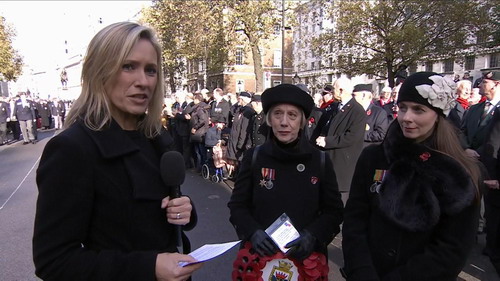
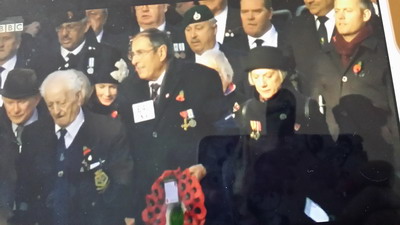
Sunday 13th November 2016 - Annual Remembrance Parade at the Cenotaph On a calm clear day 14 members of the Neptune Association met on Horse Guards Parade to take part in the Annual Cenotaph service and March Past. It was a very poignant and special occasion to commemorate the 75th Anniversary of the loss of HMS Neptune and Kandahar and a fitting tribute to those who lost their lives. The BBC had pre arranged to interview Valerie Pennifer and her daughter to hear their story and as we were lined up in Whitehall we were able to see them being interviewed whilst waiting to take our turn in the march past. It was very welcome publicity for the disaster of Force K . The interviewer was Sophie Raworth. Then it was our turn to start the march past and led by our Chairman, John McGregor with heads held high and shoulders back we marched off down Whitehall, past the Cenotaph where we did a smart eyes left and John passed the Neptune wreath and Valerie passed the Kandahar wreath to be laid. David Dimbleby gave us excellent publicity with his commentary saying what a fine example of a Ship Association we were and mentioned the date of the tragedy as 19th December 1941.
Sophie Raworth interviews Valerie and Carrie Pennifer
Marching GrahamDavies CarrieP JohnMcG ChristineCorner ValeriePennifer RichardCorner Prince Charles took the salute in Horse Guards Road and into Horse Guards where we waited until the parade had finished and the National Anthem played. Saturday 22nd October 2016 - 14th AGM at the National Memorial Arboretum, Alrewas 2016's AGM was held, as has become traditional, at the National Memorial Arboretum, Alrewas on Saturday 22 October. Members and friends gathered for a service of remembrance with wreath laying at our Neptune and Kandahar Memorial at 12:00 noon. The service was conducted by the Reverend Tim Flowers an Army Padre as arranged by Alrewas.
After the service, attendees had the opportunity to catch up with each others' news in the new restaurant which had just been opened following major development of the Visitor's Centre. The formal meeting was held in the Founder's Room (Old Rose Room) at 13:30. Speakers included Captain Craig Mearns who has been Captain of HMS Neptune the Clyde Naval Base since May 2015 and Captain David Robertson the Hydrographer of the Royal Navy who updated us on the latest news of the search for HMS Neptune off Tripoli. He reiterated that most of the wreck of HMS Neptune had been found by an RN Survey ship. The precise location will not be released. Suffice to say that she lies outside Libyan territiorial waters some miles south of the official Admiralty position. This remarkable news contributes to explaining exactly what happened after she hit the 4th mine and why the casualty list was so very high. His presentation at our Plymouth meeting in May of this year was particularly memorable helped by inputs from Lt Cdr Felix Carmen and Able Seaman Steve Martin who were on watch when the wreck was spotted.
The AGM following the talks and presentations was conducted by our Chairman John McGregor. All agreed about the importance of preserving the Neptune wreck from divers and scrap metal dealers. The meeting concluded at 16:30.
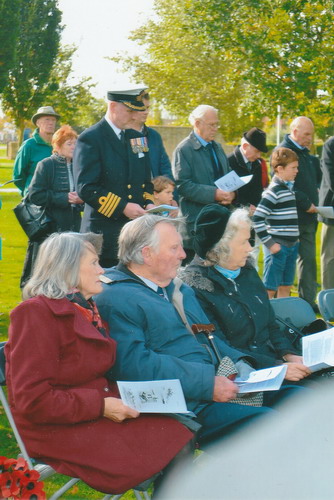 Captain David Robertson and Association relatives at the Memorial
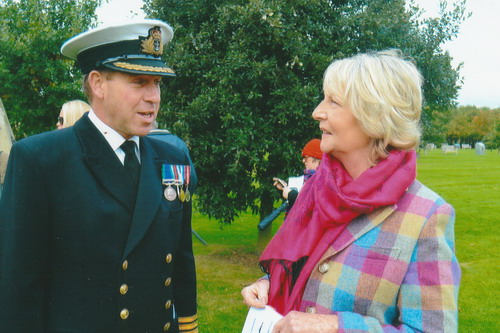 Captain Craig Mearns with Norma Hudson daughter of sole survivor
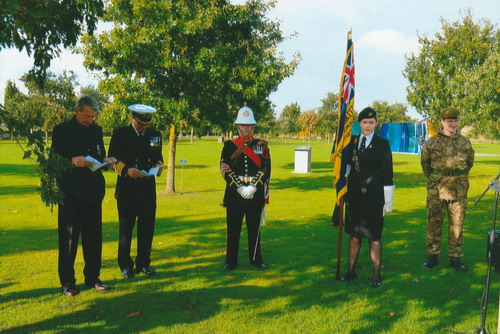 Nick Wright Craig Mearns Bugler Standard Bearer Robertson
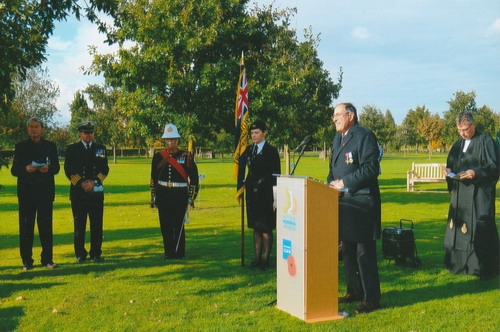 JNick Wright Craig Mearns Bugler Standard Bearer with John McGregor addressing the relatives and guests with Rev'd Tim Flowers behind
29th September to 5th October 2016 - 2nd Malta Pilgrimage Nine years after the first such Pilgrimage, 15 members and friends of the Neptune Association were in Malta to mark the 75th Anniversary of the tragedy of December 1941 representing both Neptune and Kandahar connections. The trip was arranged by Christine Pitman-Corner and Gerry Wright, with Gerry and husband, Association President Nick, flying out two days before the rest of the party to complete final preparations for the commemoration events.
On Thursday 29th September, the UK contingent (other than the Wright advance party) flew in from various airports and were transported to the Imperial Hotel in Sliema. Nick Wright gave an informative early evening briefing on the events in the Mediterranean prior to 18 December 1941 before the group had a joint dinner at the hotel.
At 09:30am on Friday 30th, the group was transported by minibus into Palace Square to watch the Changing of the Guard and from there attend the noon ringing of the Siege Bell. This formed an appropriate setting for a group photograph (as it had on the first pilgrimage back in 2007) before all lunched together at a waterfront restaurant. The afternoon was taken up with a personally conducted tour of Fort St Elmo (impressively under restoration with EU support) and the Second World War exhibits of the War Museum conducted in stunning weather which was a feature of the whole trip. For 10:30am on Saturday 1st October, an excellent, very comprehensive harbour boat trip was arranged out to the breakwaters and far up all the creeks. Nick Wright managed to prevail upon the boat guide to broadcast specific details of the mooring locations of the Force K ships to all the passengers but especially for the benefit of Neptune & Kandahar group and pointed out other sights of interest.
At the now customary 09:30am on Monday, the minibus was at the hotel steps to transport the group to Malta Maritime Museum at Vittorioso for the 75th Commemoration Service at the Neptune Memorial at 11:00am. Nick Wright gave a Welcome and the moving service was led by Father Simon Godfrey adding to Nick’s thoughts about Nelson and Malta’s RN tradition and heritage. From among an impressive gathering of official guests, the Bible reading was given by the British High Commissioner and the Kohima Epitaph by the New Zealand High Commissioner. Wreaths were laid by Harry Waterworth (Neptune), Brian Wilson (Kandahar) and the British High Commissioner. In addition to the official guests a standard bearer, two very professional buglers and uniformed naval personnel attended. An extremely successful reception followed. The British High Commissioner, Stuart Gill turned out to be the son of an HMS Dunedin survivor and had written a book, “Blood in the Sea: HMS Dunedin and the Enigma Code”, after extensive research at the National Archives so had more than just a diplomatic interest but a genuine affinity for our organisation. There was also an opportunity to meet Mr Joseph Caruana, the Maltese historian who has written extensively on Force K and Maltese history generally. The afternoon consisted of a personally conducted tour of Fort St Angelo covering its medieval and Royal Naval history, like the Saint Elmo tour, accompanied by scorching weather.
OFFER OF A NEPTUNE PAINTING FOR SALE Watercolour painting of HMS Neptune by Eric Tufnel. At the 2011 AGM Nick Wright showed two pictures of Neptune, an original watercolour painted post WWII, and a mounted reproduction of the original. This picture, painted by the well respected Naval Artist Commander Eric Tufnel, shows Neptune in daylight with a reasonable sea running, entering the minefield which eventually sank her. The picture shows one mine exploding on her starboard side and two aft at the same time, which of course is incorrect. It is therefore not a strictly accurate picture due to the setting the artist has chosen but, to be fair to him, it has to be daylight to see the object of the painting, the ship. I believe the actual picture of Neptune is the best of any action painting or photograph that I have seen.
Mounted Reproductions can be made available from the original Art Dealer and can be obtained through Nick Wright at a probable cost of £66. (Actual cost depends on the number of reproductions ordered).
Should anyone be interested in following this up please contact Nick at 25 Theillay Close, Nether Stowey, Bridgwater, Somerset TA5 1JY and further discussion can be held by telephone or e-mail. I look forward to hearing from you all!
21st May 2016 - Plymouth Members' Meeting A Service and wreath laying were held at the Royal Naval Memorial on the Hoe at Plymouth at 1045 am on Saturday May 21st, to honour the memory of those who died in the two ships HMS Neptune and HMS Kandahar. This was followed by a meeting and buffet lunch at the Duke of Cornwall Hotel, Millbay Road, Plymouth PL1 3LG near the Hoe. The guest of Honour was Captain David Robertson the Hydrographer of the Navy who announced at the meeting that most of the wreck of HMS Neptune had been found by an RN Survey ship. The precise location will not be released. Suffice to say that she lies outside Libyan territiorial waters some miles south of the official Admiralty position. This remarkable news contributes to explaining exactly what happened after she hit the 4th mine and why the casualty list was so very high. His presentation was particularly memorable helped by inputs from Lt Cdr Felix Carmen and Able Seaman Steve Martin who were on watch when the wreck was spotted. Members paid £12 per head as a contribution to the hire of the room and the cost of the lunch. The remaining costs were borne by the Association, which including the hire of a bugler and wreaths for Neptune and Kandahar. There was no charge for the service on the Hoe.
President Nick Wright and Captain David Robertson at the Plymouth Hoe Memorial
Able Seaman Steve Martin and Lt Cdr Felix Carmen who were on watch when the wreck was spotted
Neptune wreck survey image
EVENTS IN 2015
Saturday 19th December 2015 - 74th Anniversary of the Loss of HM Ships Neptune & Kandahar
Informal Remembrance Services were held as usual by our memorial at Alrewas and by the Southsea Naval Memorial on Saturday, 19 December 2015, marking the 74th Anniversary of the Tragedy off Tripoli in 1941.
Saturday 10th October 2015 - 13th AGM at the National Memorial Arboretum, Alrewas
The 2015 AGM was held at the National Memorial Arboretum, Alrewas on Saturday 10 October. More than forty members and friends gathered for a service of remembrance with wreath laying at our Neptune and Kandahar Memorial at 12:00 noon. The service was conducted by Archdeacon John Green, our Association Padre, now Archdeacon pastor of the Diocese of Coventry and a recent Chaplain of the Fleet.
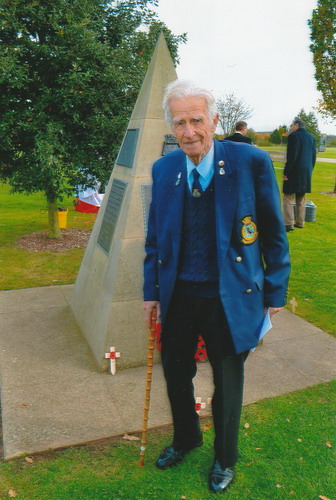 Commander Keith Evans Chairman Hood Association
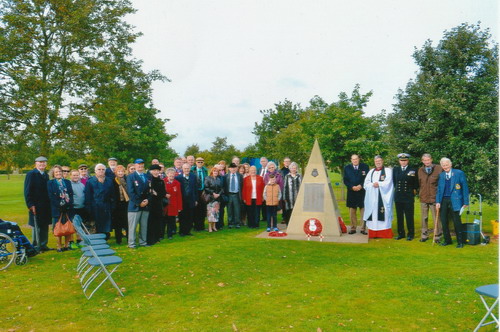 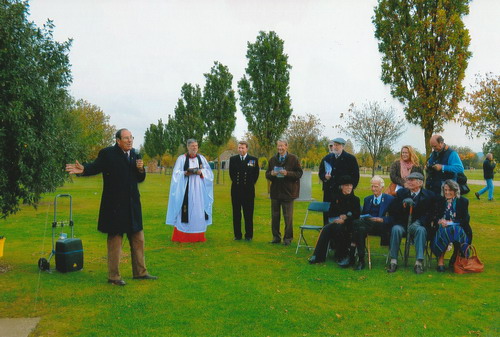 John McGregor addresses members and guests
After the service, attendees had an opportunity to catch up with each others' news in the temporary restaurant necessitated by the major development of the Visitor Centre before the formal meetings in the Rose Room at 13:30.
At the Members' meeting preceding the AGM, distinguished guest speakers were Commander Keith Evans, Chairman of the Hood Association, and Captain Craig Mearns, who has been Captain of HMS Neptune the Clyde Naval Base since May 2015. Neptune Association Chairman Commander John McGregor and Deputy Chairman Rorie Grieve gave presentations on aspects of research into the Neptune tragedy and Professor Gavin Don Chairman of the Triumph Association updated members on progress into the search for his uncle's submarine HMS Triumph since his presentation in November 2014.
The AGM followed before the day concluded at around 16:30.
Saturday 9 May 2015 - Chatham Members' Meeting
A very successful day out was arranged by Christine Pitman-Corner at Chatham Historic Dockyard on Saturday 9 May 2015 attended by 25 enthusiasts with Neptune or Kandahar connections. The Dockyard has special relevance to the Association being the location of HMS Neptune's final refit after which she sailed from the British mainland for the last time in April 1941 and also the home of the Royal Navy's only surviving World War II destroyer, HMS Cavalier, as a memorial to all destroyers including HMS Kandahar.
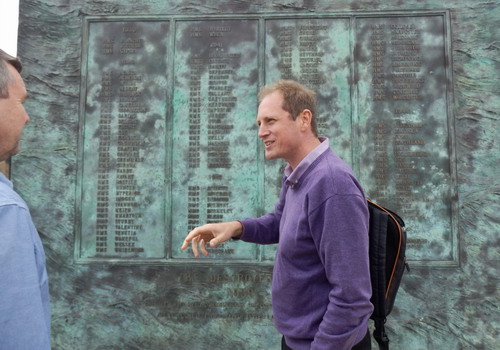 Robert McGregor by Cavalier Memorial
Tea/Coffee and Biscuits were served in the historic Commissioner's House at 10:30 followed by a general introduction to the site covering its history from creation through the Anglo-Dutch Wars, World War II, closure, rebirth as a museum and memorial to current fame as a location for movie and television filming.
Following the presentation, a short service of reflection and remembrance was held at 11:30 at the Destroyer Memorial next to HMS Cavalier on which the names of HMS Kandahar, HMS Lively and HMS Havoc are commemorated.
Members and friends then had an hour or more to tour the many attractions of the site including the two historic naval museums, the self-guided audio tour of HMS Cavalier, book for the guided tour of the submarine HMS Ocelot and/or marvel at the RNLI's collection of historic lifeboats among other treats.
At 01:30 a hearty lunch of fish and chips or bangers and mash was served in the Commissioner's House allowing time for a catch up with friends old and new followed at 02:30 by a very enjoyable and informative tour of the Ropery with demonstrations of how rope-making was carried out in this enormous building over the
years.
.
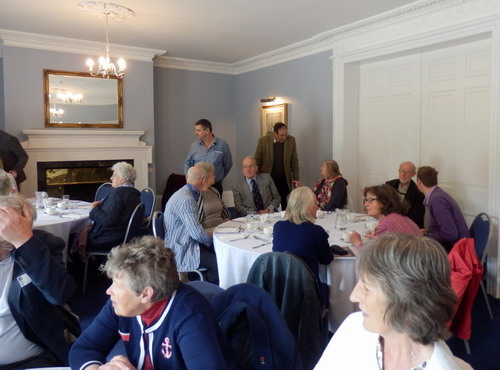 Lunch group in Commissioner's House
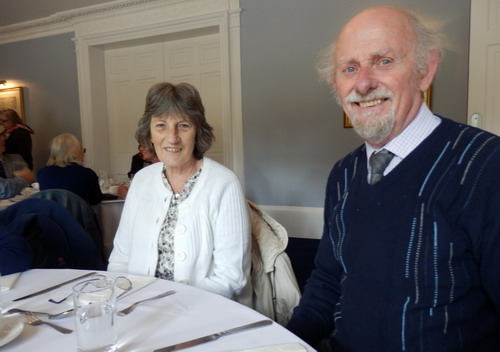 Harold and Frances Brookes (son of Marine Ronald Dubber)
There was then further opportunity to get to the attractions still to be seen before a final cup of tea and chat back at the Commissioner's House and a vote of thanks to Christine Pitman-Corner for organising a hugely enjoyable day!
EVENTS IN 2014
Saturday 15th November 2014 12th AGM at the National Memorial Arboretum, Alrewas
The AGM was held at Alrewas on 15 November, 2014 with a service conducted by Archdeacon John Green, our Association Padre and a recent Chaplain of the Fleet. Once again it was well attended with about 50 members, relatives and a contingent from Faslane. We welcomed Captain James Hayes who had just taken over from Captain Alistair Willis. Since it was his first week in post we much appreciated that he made the effort to come. After the service, we gathered in the Rose Room to hear some excellent speakers. Your President Nicolas Wright opened proceedings and welcomed our guests. Stephen Prince, Head of the Naval Historical Branch who has responsibility for the historical input into current naval development, gave an excellent summary of the naval war in the Med leading up to and following the Neptune tragedy. Professor Gavin Don gave a fascinating talk on his search plans for his uncle's submarine HMS Triumph, his purchase of a Motor Cruiser and of fitting it with side scan sonar. Captain Hayes introduced himself and undertook to maintain our ties with the modern day HMS Neptune. Since the AGM, Captain Hayes has held a commemoration service at Faslane on 19 December which is much appreciated.Captain Hayes also wrote to say that “We are very proud to be the only naval base in Scotland and so wanted to highlight our Scottish identity by creating a new Neptune tartan for us to wear to social events. As the design, also recognises the previous HMS Neptune, I thought you would appreciate this news article from the Scottish Express.” Mr Wilton, director of the Scottish Tartans Authority, said it was fairly uncommon for new military tartans to be launched. Discussing his design, he said: “HMS Neptune at Faslane is in MacAulay clan country, so the pattern is based on the clan's hunting tartan from 1850. The Royal Navy colours of red, white and blue predominate and the green is taken from the ship HMS Neptune's badge. Those greens are edged in black which commemorates the tragic loss of the cruiser in 1941 in the Mediterranean Friday 16th to Sunday 18th May 2014 - Visit to HMS Neptune, Faslane
The Association was invited back to Faslane by Captain Alistair Willis, Captain of the current HMS Neptune, at the last AGM and the visit was subsequently arranged for the above weekend with a group of 26 members of the Association making the journey to Faslane. Welcomed and briefed by Base Warrant Officer Andy Stevenson and Chief Petty Officer George Crawford, the group was introduced to the small band of volunteer junior rates who would be their guides for the weekend. After dinner in the Warrant Officers' Mess members had an opportunity to catch up with each other before retiring to accommodation in the Miller Block, named for the Captain of Royal Marines lost with the cruiser in December 1941. After an 8am breakfast on Saturday morning, Captain Willis gave an extensive presentation about the base before a packed day got underway. A tour of the minehunter, HMS Penzance, was followed by the rare privilege of a tour of HMS Vigilant, one of the Royal Navy's four Trident ballistic missile nuclear submarines. Lunch was a barbecue provided by Warrant Officer Gary Nicholson, his Neptune Field Gun Competition team and their families with Captain & Mrs Willis in attendance for the rest of the day. The fact that the showers of the morning had turned into a torrential downpour could not spoil this social event with the sailors and their families and a restricted demonstration of the team's skills was mounted. WO Nicholson showed members the newly decorated team crew room with information boards depicting the 1938 Neptune team using historic material provided by the Association. This was followed by a tour of the base's huge ship lift with its 96 winches that can safely lift the floor with a chocked submarine clear of the water for maintenance. After dinner there was an opportunty for members to mix in the bar with their Naval hosts. Sunday morning began with another Mess breakfast followed by a cruise aboard the Serco support vessel, SD Omagh, along the base water front and down to the mouth of the Gare Loch and back. This gave a great opportunity for conversation with the young Naval guides to learn about their lives on the base. The party then returned to the bases's St John's Church to meet Captain & Mrs Willis and admire the new memorial to the men of the WW2 HMS Neptune lost in December 1941. There followed a moving communion service in the church conducted by Naval Chaplain Simon Beveridge. The service also incorporated the dedication of a new oak altar for the Neptune Memorial Chapel, the existing Neptune Cross for the same chapel, and a compact cross and candleholders for use in services aboard HMS Vigilant. In an emotional and surprise conclusion, member John Dallen's silver spoon and teething ring bell dating from his christening aboard HMS Neptune off Saint Helena in 1937 was also blessed by the Chaplain. After lunch and mutual expresssions of regard and determination to maintain links between the Association and the latest HMS Neptune, the group took their leave of the base. Every member of the group was impressed by the welcome and experience that Captain Willis and his team had given them and very grateful for the hard work put in by them and the Association's Chairman and Secretary John McGregor and Maureen Hayhurst to make the visit such a resounding success. EVENTS IN 2013 Thursday 19th December 2013- 72nd Anniversary of the Loss of HM Ships Neptune & Kandahar
The traditional brief Memorial Services were held at the Neptune and Kandahar Pyramid Memorial at the National Memorial Arboretum at Alrewas and at the Royal Naval Memorial at Southsea on Thursday, 19 December, 2013.
On a cold but brilliantly bright morning at Alrewas, a good turnout of Nick & Gerry Wright, Diana Clayton, Graham Davies, Rorie & Kathy Grieve, and Richard Hickman (great nephew of Neptune casualty Boy Seaman Arthur Brough) with a friend (and accomplished photographer) Nick held a Short Remembance Service specifically for Neptune & Kandahar prepared by Gerry. Poppy Crosses were laid accompanied by a laminated information sheet prepared by Adrian Fewins.
Shortly after completion of the service, Gerry Oliver, unaware of the service but mindful of the date, joined the group and laid a wreath in memory of his half-brother, Neptune casualty Leading Seaman Tommy Oliver.
At Southsea, Christine Pitman-Corner (without Liz Dean who was away this year) also held a brief service.
Saturday 2nd November 2013 - 11th AGM at the National Memorial Arboretum, Alrewas
The 11th Annual General Meeting of the Neptune Association was held at the National Memorial Arboretum at Alrewas on Saturday, 2 November, 2013. A Service of Remembrance preceded the AGM at the Neptune & Kandahar Memorial at noon conducted by the Association's Chaplain, Archdeacon John Green, with a very competent 13 year old bugler, two standard bearers and strong representation from the current HMS Neptune, HM Naval Base Clyde, Faslanne, in attendance.
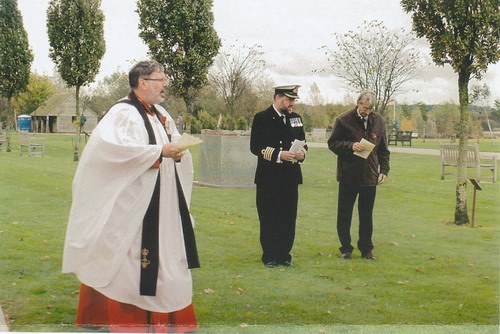 Archdeacon John Green Captain Alastair Willis Commander Nick Wright
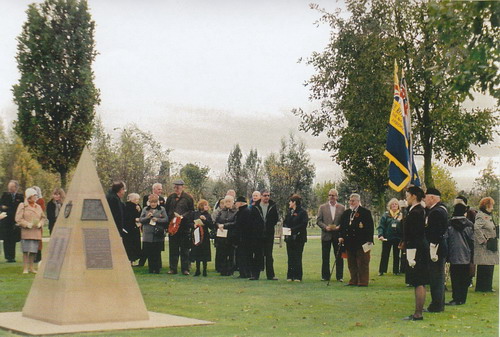 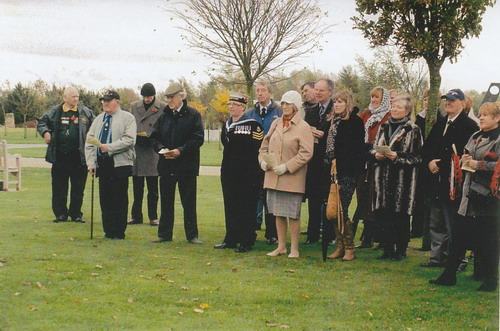 Memberas and Guests with Faslane Naval ratings
After opportunity for members to catch up with each other in the Arboretum's Visitor Centre, the formal business of the AGM began at 2pm. After a moving tribute to the late Mrs Nixie Taverner, co-founder and President of our Association by John McGregor and appropriate words from her son Steve, the formal business of the AGM was speedily concluded.
Chairman John McGregor then introduced Captain Willis, the Captain of the current HMS Neptune, who delivered a lively and informative presentation on his command. Members were pleased to hear of Captain Willis' belief in the importance of the Neptune heritage and his enthusiasm for links between the Association and the Faslane submarine base. He thanked the Association for the painting of Neptune and details of previous holders of the name delivered by John earlier in the year, welcomed the Association's offer to deliver photographs of the 1938 Field Gun Team to encourage that of 2014, and hoped to welcome another visit to the base in the new year.
The meeting closed at 16:25 and was pronounced a great success by members attending.
Saturday 18th May 2013 - Plymouth Members' Meeting
The Neptune Association held a Service and wreath laying at the Royal Naval Memorial, The Hoe, Plymouth on Saturday May 18th at 11am, to honour the memory of those who died in the two ships HMS Neptune and HMS Kandahar.
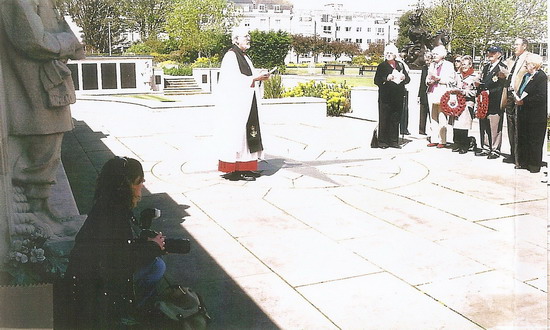 Rev'd Peter Warland conducts the service
An excellent attendance of around 50 members, families and friends (including many who had not previously attended an Association event) attended a moving service conducted by Rev Peter Warland (formerly Chaplain of HMS Illustrious, which was coincidentally anchored off the Hoe at the time). A contemplative silence was framed by "The Last Post" and "Reveille" blown by bugler Tony Crisp after which wreaths were laid by longstanding members Geoff Staley and Liz Dean in memory of the crews of HMS Neptune and HMS Kandahar respectively and by sisters Nora Evans and Joyce Pearce in memory of their father, Walter Thorne, lost on HMS Neptune.
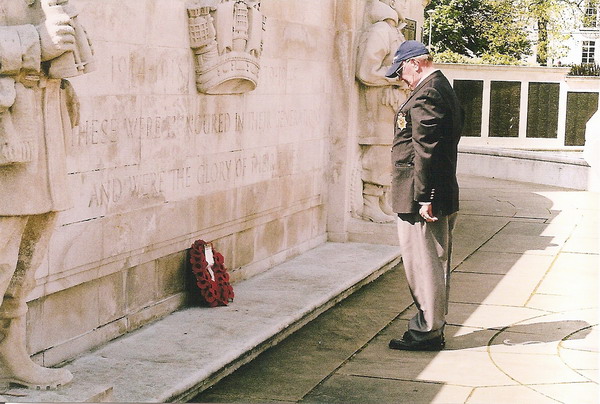 Geoff Staley remembers his father Stoker Leonard Staley
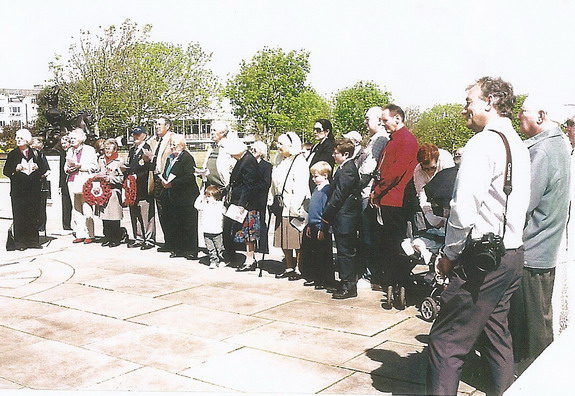 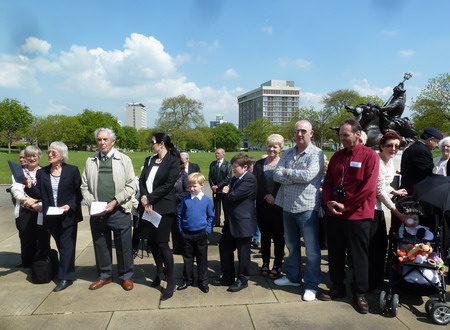 The service was followed by a meeting at the Duke of Cornwall Hotel, Millbay Road, Plymouth at which the Chairman Commander John McGregor welcomed attendees and led a lively Question & Answer session on the circumstances surrounding the loss of the two ships with Commander Nick Wright and Rorie Grieve.
Afterwards a buffet lunch was served as attendees caught up with old friends and new.
The day, which had all been arranged by Christine Pittman-Corner, was agreed by all to have been a great success with the last attendees leaving around 4pm.
EVENTS IN 2012
Wednesday 19th December 2012 - 71st Anniversary of the Loss of HM Ships Neptune & Kandahar
As is traditional each year, brief Memorial Services were held at the Neptune and Kandahar Pyramid Memorial at the National Memorial Arboretum at Alrewas and at the Royal Naval Memorial at Southsea on Wednesday, 19 December, 2012.
It was a very cold morning at Alrewas, Geoff Staley and Rorie & Kathy Grieve met for the the daily 11am Rembrance Service in the Arboretum Chapel (and were the only people attending the indoor Service) and then walked over to the Memorial for a Short Remembance Service specifically for Neptune & Kandahar prepared by Mrs Geraldine Wright. Happily the rain held off long enough for them to stay dry.
At Southsea, Christine Pitman-Corner and Liz Dean also held a brief service, laying crosses accompanied by a laminated information sheet prepared by Adrian Fewins.
Saturday 17th November 2012 - 10th AGM at the National Memorial Arboretum, Alrewas
The 10th Annual General Meeting of the Neptune Association was held at the National Memorial Arboretum at Alrewas on Saturday, 17 November, 2012.
A great turnout of more than 40 Association members met at the Neptune & Kandahar Pyramid memorial at 1200 and a moving service was conducted by Archdeacon John Green who is our Chaplain.
Attendees lunched and caught up with each other in the Visitor's Centre before adjourning to the Rose Room for the AGM business at 1330 which included the unanimous passing of a resolution to extend the life of the Association for a further two years and to review it again at the end of that time
Presentations were delivered before and after the AGM by Chairman Commander John McGregor on various recent developments in the Association's areas of interest. The meeting ended with John being joined by Commander Nick Wright and Rorie Grieve for an open discussion with members on the state of Association investigations into the tragedy of 18 - 20 December 1941.
Archival recordings relating to the HMS Neptune
Details of these recordings available from Radio New Zealand can now be found on the DVDs page of our website.
Sunday 27th May 2012 - Portsmouth Members' Meeting A social "get together" took place on Sunday 27 May in H.M. Dockyard, Portsmouth organised by Christine Pitman-Corner for which no charge was made.
The weather on the day was much better than most of the subsequent summer, though the parade at Gosport to commemorate the thirtieth anniversary of the Falklands Campaign caused all ferries to be stopped at 10.30am which may have complicated some local members travel. Ten Association members met at 11am in the National Museum of the Royal Navy for tea/coffee and biscuits after which they had a very enjoyable time looking around the Museum and visiting HMS Victory, entry to both being free.
Lunch arrangements were left to personal choice before attendees gathered again at 3.30 in the Museum where tea and coffee was waiting and a brief presentation on the Museum delivered by a member of the Museum staff. Then the members had an opportunity to hear a CD of some of the very moving 13 November 1941 Radio New Zealand recordings of HMS Neptune crew members' Christmas greetings to their homeland, never broadcast at the time. The Museum was previously unaware of the recordings and the Chairman has subsequently put the Archivist of their Oral History Section in contact with the Radio NZ Sound Archives so that they may obtain their own copies.
For latest details of the availability of CDs from Radio NZ see the relevant article headed "Archival Recordings relating to the HMS Neptune" elsewhere in our website NEWS section.
EVENTS IN 2011 Saturday 26th November 2011 - 9th AGM at the National Memorial Arboretum, Alrewas
The Ninth Annual General Meeting of the Neptune Association was held at the National Memorial Arboretum at Alrewas on Saturday, November 27th,2011. This venue was chosen because it was as near a date as possible to the seventieth anniversary of the sinking of HMS Neptune on December 19th 1941 and subsequently of HMS Kandahar on the next day, as could be managed.
Members of the Neptune Committee felt that it was appropriate to hold the meeting at this venue as it is the only place in Britain where all the names of those who lost their lives in HMS Neptune and HMS Kandahar are recorded together on one monument and it has therefore become a 'spiritual' centre.
A service was held at 1300 and was conducted by Archdeacon John Green. The service sheets were produced by Gerry Wright.
A wreath in memory of those who lost their lives in HMS Neptune was laid by Vi Cornish, widow of Corporal James Auchinlech, Royal Marines.
Diana Clayton laid a wreath for the Royal Marines. Her father was Sergeant William Crocker.
Valerie Pennifer then honoured the men of HMS Kandahar who also lost their lives.
Personal wreaths were laid by Liz Dean, niece of Leading Seaman Cyril Hambly, HMS Kandahar, Harold Mason, brother of Ordinary Seaman William Mason, HMS Neptune.
Yvonne Merkin, daughter of Moira Hudson who was the widow of Engine Room Artificer John Hudson also laid a wreath in his honour.
The AGM started earlier than planned, at 1445. It was a brief meeting with no contentious issues raised. The meeting closed at 1515.
Eric Grove, Professor of Naval History at Salford University and friend of the Association, delivered another of his lively presentations to the membership after the AGM. He sought to reassure members that, while the events of 19 December were, of course, in his words “an awful, terrible tragedy”, they arose from risks which were considered worthwhile in the context of the situation in the Mediterranean and the consequences for the North African Campaign. He highlighted the extraordinary success achieved in the preceding period by the brave men of Force K and the fact that, by denying Rommel the fuel and equipment he required, they may well have saved Egypt from loss to the Axis in 1941. Without their efforts, sacrifice and the respite they gained, the eventual victory at the Second Battle of El Alamein a year later might not have been possible.
His talk was followed by questions from the floor, giving rise to an exchange of information between Commanders McGregor and Wright and Professor Grove on the latest results of Association research.
After tea and coffee, Commander McGregor, Chairman of the Association, updated the members as far as possible on recent events in Libya, particularly as they affected personalities and places encountered by members on the Pilgrimage in April 2007.
Finally, Professor Grove treated the members to an impromptu presentation on current Naval activities off Libya and his characteristically outspoken views on the recent Defence Review, particularly with regard to cuts to the Royal Navy.
The session closed (as did the Arboretum) at around 1630.
Sunday 13th November 2011 - Annual Remembrance Parade at the Cenotaph
In this 70th anniversary year of the loss of HM Ships Neptune & Kandahar, for the first time, the Neptune Association joined the Remembrance Day parade at the Cenotaph on Sunday November 13th. Association Trustee Christine Corner acted as our Contingent Organiser for the day and arranged for us to be allocated 18 tickets which is a great honour and 13 members tookup the invitation. While ex service contingents assembled on Horse Guards, the non ex service contingents (which we, as an association for relatives, are classified) assembled in Whitehall. Christine provided each member coming with details of the meeting point and timings.
Friday 2nd to Sunday 4th September 2011 - visit to HMS Neptune Faslane
Twenty members of the Association made their way from various points in the UK by air, car and train to Faslane in the Firth of Clyde. HMS Neptune is a shore base for training, servicing and repairs to submarines, minesweepers and minehunters. Among the group were family members of nine Neptune fatalities – one widow, two sons, two daughters, two grand-daughters, one nephew, two nieces, one sister-in-law and two sons-in-law. Also with us were Norma Hudson and her husband. Norma’s father, Norman Walton was Neptune's only survivor.
After registration, the issue of several passes and a ten minute Health and Safety video, we arrived in the Warrant and Chief Petty Officers' mess and bar just in time to get a meal before the kitchen closed for the night. Later, after some liquid refreshment, we were allocated our rooms (cabins) in the newly built accommodation blocks. We had been advised that only bedding would be supplied (no toiletries or towels) but we were somewhat surprised to discover that bedding meant just that – the beds were not actually made up!
Saturday morning started very wet and squally but the weather did improve during the day. After a hearty breakfast, where the very helpful kitchen staff served us with almost any cooked combination requested, Commander Philip Ireland, the Base Commander welcomed us. He explained that the base has been much extended but is to be still further developed to become the main submarine training and minesweeper base for the whole of the UK. As a result, the name of HMS Neptune is safe for the future and has a long life ahead of it. He added that the connection with our Association was important to the Base and that as long as he was in the post, we would always be welcome there
After that, we went in three groups on a police launch tour, up and down the Gareloch to view the Base facilities from the water. Two nuclear submarines, HMS Astute and HMS Vengeance were moored on the jetties, but unfortunately the huge ship lift was unoccupied. We saw four ships alongside, three Sandown Class minesweepers and one minehunter. While each group was out on the water the rest of us spent time in the Reading Room where we were able to listen to the recording of the Christmas messages made by the New Zealand sailors on Neptune in December 1941 to their families back home. The recording is now available and can be heard on www.radionz.co.nz/podcastys/SoundsHistorical/HourTwo-19June2011.
After lunch in the mess we were taken by the Visits Officer, Chief Petty Officer Michael Taylor, to the Trident missile carrying submarine, HMS Vengeance. There we were provided with temporary radiation monitors and were split into two groups. We walked along the top of the submarine to the conning tower and climbed down the twenty foot ladder into the nerve centre of the ship. The first group was escorted by Leading Sick Berth Attendant Aron French. Our group was led by twenty year-old Weapons Engineering Mechanic Arron Henry who took us through crowded control rooms, operational nerve centres, past the nuclear missiles, into very cramped living and sleeping quarters and into the incredibly small galley which had to cater for a crew of between 140 and 180. After going down five floors we were shown into Arron’s favourite workplace, the torpedo store and firing station. The impressive cleanliness and tidiness of this area was explained by Arron as the result of a recent inspection which can only have given it the cleanest bill of health possible. The enthusiasm of the young crew and their pride in the jobs they do, especially of our guide, was heart-warming. We felt that everything was truly in safe hands. Then came the climb back up. This was somewhat daunting for some of us and a slightly shaky group re-assembled on the dock to be transferred back to the mess for dinner.
Before dinner we had a fascinating talk by Gavin Don who had himself been a Lieutenant RN, serving in several ships but had retired after finding he was too old for a full submarine career. He told us of his childhood memories of seeing the sword, portrait and medals (DSC with two bars) of his uncle Robert who was a submarine gunnery officer and who died in January 1942 in the submarine HMS Triumph, sunk with all hands off Greece (just a fortnight after Neptune's sinking). When he was 18, Gavin spent a year sailing in the Aegean and had wondered idly if he was passing over his uncle's tomb.
Triumph had six torpedo tubes, plus two external torpedo tubes, and carried a total of 16 torpedos. She had a gun firing 4 inch shells which could be operated within 40 seconds of surfacing. Early in the War in 1939, she had actually struck a mine and survived. 18 feet of her bows had been blown off, and she spent 9 months being repaired in Chatham Dockyard to rebuild her bows and torpedo tubes.
Last year, with a few spare days in London, Gavin decided to visit the records office in Kew to see if he could find clues as to HMS Triumph's resting place. She had been given a patrol area by the submarine operating staff in Alexandria of a “box of sea” 250 miles x 200 miles in which to operate and to take out any enemies found in that area. He began by reading the patrol reports of HMS Triumph and her T boat sisters, aiming to get inside the operations head of her CO and officers. The reports itemise virtually all activity (torpedo firings, navigation etc.) and also contain some ironic humour. The Admiralty tended to accept “gallows humour” because of the danger experienced by submariners in the Mediterranean.
During the final hours of his research Gavin discovered a report from 1952, from Axis records which had been seized after the war, which gave no information on the sinking but did show a report of a torpedo exploding on a beach off Cape Sounion on 9 January 1942, and reports of periscope sightings from shore made by Greek authorities. Triumph's orders were to drop a raiding party off Piraeus on December 30th and then patrol at will before returning to pick up her party on 9 January 1942. She failed to make the rendezvous. He extrapolated from this that HMS Triumph had retreated until pick-up time to a safer location at depth but took the opportunity to fire a torpedo at a passing Greek lighter and this firing was mentioned in the Axis reports. This attack was at 6.00 a.m. but Triumph never turned up to pick up the landing party so she must have sunk somewhere between the torpedo firing point and the port of Piraeus.
Gavin knows that there was a large Italian minefield between these two points and he is planning to buy a suitable craft and sonar equipment to try to locate the wreck. He is aware, however, that before that he will need to obtain permission and approval from many Greek naval and civil authorities who might be involved. We all wish him well with his endeavours.
After dinner the evening was rounded off by a few libations in the bar where the low cost of the beverages was met with unanimous approval. After another hearty breakfast on Sunday morning we were given an up-date by our Chairman, John McGregor, on the long term aim of finding the exact location of HMS Neptune and some of his research on events leading up to the loss. The present situation in Libya will undoubtedly delay any further activity on locating the wreck as the Libyan authorities will have other priorities, and the political situation may take long to stabilise. He emphasised that any search must be done through Libya as Neptune lies in her territorial waters.
John went on to give the background to events in the Med at the end of 1941. British forces in North Africa had broken out from Tobruk and were advancing west for Benghazi. General Rommel, in full retreat, urgently needed ammunition, tanks and fuel. Preventing these supplies from getting from Italy to North Africa was the top priority for the Navy and RAF in the Med. In Rome, Kesselring’s top priority was to get supplies to Rommel and on 13th December 1941 the Italian fleet (3 battleships, 9 cruisers and 27 destroyers) were deployed to protect a convoy of eight big merchantmen carrying the necessary re-inforcements. That night the RN submarine Upright attacked and sank two of the merchant ships, and the submarine Urge put a torpedo into the battleship Littorio. In the confusion, two merchant ships collided and the Italian convoy returned in disarray to port. German high command insisted that the four remaining merchant ships be despatched again to Libya. By chance a British cruiser squadron was escorting the merchant ship Breconshire, carrying urgently needed supplies and fuel from Alexandria to Malta and the two forces met in a confused and inconclusive night action known as the 1st Battle of Sirte. Neptune escorted Breconshire into Malta on 18th December 1941. The Italian convoy, however, reversed course yet again and headed for Libya with cruiser protection. Flag Officer Malta was receiving Enigma de-crypts of virtually all the Italian operational signals, and ordered the dispatch of all available ships in Malta harbour to chase and destroy the convoy. Three cruisers and four destroyers set out under the command of Captain Rory O'Conor.
The minefield north of Tripoli had been laid on May 1st and June 3rd 1941 and the submarine Undaunted was sunk on May 8th. Two more submarines P32 and P33 were sunk in August 41, after which the submariners kept well clear of the Tripoli minefield. The Board of Inquiry report shows that Vice Admiral Wilbraham Ford, Flag Officer Malta sent the operational signal to Force K to head directly for Tripoli. Whether or not Captain O'Conor was fully briefed on the extent of the minefield is unknown but it seems that the ships astern of Neptune knew they were approaching the minefield and Penelope’s navigator gave a ten minute warning of mines ahead. The fact remains that Neptune was steaming at 24 knots when she hit the first mine just after midnight on 19 December.
After two hours, Penelope assumed that Neptune had drifted clear of the mines, and sent two destroyers to take Neptune under tow. Lively was alongside Neptune and had thrown a line across when Kandahar hit a mine. After another hour, Neptune hit a fourth mine. With dawn approaching and so close to a hostile coast, Penelope made the agonising decision to return to Malta. That night, HMS Jaguar was sent to rescue the ships company of Kandahar. The two captains decided the rough seas made it too dangerous to come alongside and the crew was ordered to swim with the current to Jaguar. 180 men were taken on board and saved.
John concluded by saying that after the sinking of Neptune, the four Italian merchantmen succeeded in landing 45 Panzer tanks in Tripoli and Benghazi, plus fuel and ammunition. The next convoy landed 55 more tanks. With these re-inforcements, Rommel made a surprise breakthrough the Allied army in early January and in four months advanced all the way to the Egyptian border.
After this talk, we attended the regular Sunday service in the chapel after which there was a short service of remembrance for those lost in Neptune. The Reverend Richard Rowe took the service which was also attended by Commodore Mike Wareham, the naval base commander, who made a point of speaking to most of the Association members. He was presented with a copy of MINEFIELD.
After a great week-end we all made our various ways home.
written by Chris Hayhurst
LATEST IMPROVEMENTS TO WEBSITE & NEW PAGES ADDED (May 2011):(click on item to bring up new page) Thursday 28th April 2011 - Members' Guided Tour of Bletchley Park Following a suggestion at the recent AGM Valerie Pennifer kindly arranged a visit for 27 Association Members to Bletchley Park. The weather was fine and after refreshments Nick Hill, a very experienced and knowledgeable guide gave the Members the history of Bletchley Park and a guided tour. In 1883, Bletchley Park became the home to Sir Herbert Leon, a London financier and his family. A friend of Lloyd George, Leon was for one term Liberal MP for North Buckinghamshire and became one of Bletchley’s greatest benefactors, much loved by the local people. He added to the Mansion considerably over the years, in a curious mixture of architectural styles reflecting his changing tastes. His initials can be seen over the main entrance.
By 1938, as the threat of war loomed, the Government Code and Cypher School, then based in London, needed a safer home. M16 found Bletchley Park, now in the hands of a property developer, Captain Hubert Faulkner, following the deaths of Sir Herbert and his wife. At a junction of major road and rail connections, it was ideally placed to become the most important communications centre in the history of modern warfare.
Bletchley Park became Britain’s best kept secret. Today the Park is open to the public as a heritage site and museum and offers an insight into its code-breaking successes which helped shorten World War II by around two years, thus saving countless lives.
The story of Bletchley Park was a desperate race against time. The mission of code-breakers, like Alan Turing, was to crack Germany’s coded communications, such as those sent via the German Enigma machine. Churchill called the code-breakers his “geese that laid the golden eggs but never cracked”. Bletchley Park gives one an opportunity to discover how 8,500 people worked in total secrecy with technology designed to crack the codes.
The first half of the tour concentrated on the outside of the wartime buildings in the grounds of Bletchley Park. Members were given a detailed history of the site and its code-breaking activities. They discovered what went on at each of the key locations, including the famous wooden code-breaking huts and the Polish Memorial in the stable yard. The second half of the tour, which resumed after a delicious lunch, included a visit to B Block museum which revealed the complete Bletchley Park story. It housed the Abwehr Enigma machine, Lorenz machine, Bombe Rebuild, Alan Turing statue, World War II Aviation display, Home Front exhibition, Toy collection, Milton Keynes Amateur Radio Society, Oxford & Bucks Light Infantry at Pegasus Bridge display and German Signals Group. The tour also included a visit to the rebuild of Colossus, the world’s first semi-programmable electronic computer.
John McGregor gave the vote of thanks to Nick Hill, the guide, and the staff of Bletchley Park for all their efforts on behalf of the Neptune Association. A splendid day was had by all.
Bletchley Park – www.bletchleypark.org.uk - Tel: 01908 640404
OBITUARIESEdward Allenby - 27 June 2012 The Neptune Association lost another one of it's great supporters and a Vice President with the death of Colonel Ernest Augustus ("Edward") Allenby OBE RM on 27 June 2012 at the age of 96 peacefully in Chollacott Nursing Home, Tavistock.
Colonel Allenby was known as Edward to the Neptune Association and to many others but also, we gather, as General – nick-named by Royal Marine colleagues after General Allenby of Palestine fame. Edward’s cremation on 6th July was held at Exeter; an elegant simple service well attended by family and many Royal Marines as well as a bugler from RM Lympstone who sounded the Last Post and the Reveille. Nick Wright with his wife Gerry and Gillian Wadden represented the Neptune Association; two Vice Presidents to say farewell to another Vice-President.
Neptune was of course mentioned amongst all Edward’s other activities and how he was always deeply saddened by the loss of life aboard his old ship on 19th December 1941 – including many he knew. Edward, we were told, was always a “Royal Marine, never just a Marine – they were Americans.” He served in HMS Neptune for two years between 1937 and 1939. Following this he served afloat in various other ships then took an active part in planning the Royal Marine landings at Normandy on “D” day. After the war he had a spell learning Arabic in Jerusalem of which he was very proud and always maintained a sympathy for the Palestinian cause; then with 45 Commando in Malaya returning to more organisational rather than operational appointments; and finally being involved with restructuring the Pay and Service conditions taking the Royal Marines into their current modern organisation. Edward was made an Honorary ADC to HM the Queen and, on retirement, awarded an OBE.
We, in the Neptune Association will miss Edward, particularly with the West Country visits and ceremonial at Plymouth. Kind and thoughtful with a love of people, he was an early member of the Association, keen to explore the Neptune tragedy and discover the reasons for such a high loss of life.
Ken Auger- 16 June 2012 The Neptune Association has lost a founder member, the source of much information on the ship and one of its Vice presidents with the death on 16 June 2012 of 86 year old Ken Auger at Yeovil Districtrict after a long illness.
Ken's sister-in-law Sandra has provided us with this appreciation:
He was born on 2 May 1926 on Portland and was very laid back even as a child. He always had his head in a book and that was his 'thing' until dementia set in.
During the war he was at Weymouth Technical College, one day he and a friend were cycling to college when they heard German bombers approaching Portland harbour, they stopped to watch and realised that HMS Foylebank was the target, they were in open ground along the Chesil Bank and headed for the dip along the railway line for cover. They had a bird's eye view of what went on and after all was over continued to college.
He was a very good chess player, played golf right up until 1998. He was a German linguist, played water polo for the best part of his life, was Captain of Portland and Yeovil clubs and also a county player for Dorset and Somerset. Every Christmas morning he and several other swimmers would challenge Weymouth swimmers to a race across Portland harbour to Weymouth Pier. This he would always win even breaking records. He devoured books, mainly about the war and could remember dates and names off all involved. Card tricks were also one of his interests and would baffle many a friend and work mate with his slight of hand.
Ken married Heather in March 1955, they met while they were both working at HMS Osprey.
He moved to Yeovil August 1957 to open up a London based Electrical wholesaler branch in the West Country. He worked for them until he was 65 and retired May 1991.
Frank Brown - 6 February 2011 All in the Neptune Association will have been very sorry to hear of the death of Frank Brown on 6 February 2011 at the age 88 at St Columba’s Hospice, Edinburgh after a short illness.
We first met Frank at the Dedication Service at Alrewas on 9 July 2005 and he regularly attended Association meetings. On the visit to Clyde Naval Base in May 2006, Frank, with his good friend Harry Bradbear, gave a wonderfully shrewd presentation of what naval warfare was like in the Mediterranean in in the 1940’s. Frank, from his position as part of the 4 inch gun crew in HMS Havock, and Harry, as a Signalman on the bridge of HMS Lively, were eyewitnesses when HMS Neptune struck a mine at a few minutes past 1 am on 19 December 1941. The destroyers, following the cruisers into the minefield, were fortunate not to hit mines too.
In the following months, HMS Lively was sunk and HMS Havock stranded off Cape Bon in Tunisia. The Havock ship’s company was captured and taken by cattle truck to the harsh Vichy-run camp at Laghout in the south of Tunisia. Frank, aged 19, showed his strength of character when he joined those making plans to escape and he became one of the diggers. This was a young man’s decision, courageous and requiring tremendous physical exertion. The aim was to build a tunnel three foot square and 75 yards long under the outer wall. He was part of a team of three men working in two hour shifts every evening, with rudimentary tools in stifling conditions. Above the tunnel entrance, a bridge club played for hours on end as cover. After some months, as the tunnel got longer, those who wanted to escape made their plans and submitted them to the escape committee who judged them on the likelihood of success. Frank joined up with a Fleet Air Arm Observer called Pickles who had a smuggled map. Pickles had got married in Malta, and their idea was to head north and east from the camp, get to the coast, pinch a boat and sail the 300 miles to Malta. Frank and Pickles were allocated as the thirtieth pair to go through the tunnel, but when the great night arrived there were various delays and a halt was called after the twenty seventh pair had got out. Every one of them was rounded up within a couple of days and locked up in solitary confinement.
After leaving the navy as a Petty Officer, Frank became a teacher and eventually a primary school headmaster.
WELCOME NEWS-ARCHIVE LINKS GROUP PHOTOS
DIARIES MALTA/TRIPOLI-PILGRIMAGE NORMAN-WALTON SHIP-MODELS OLD FORUM MESSAGES 2011-2012 2008-2010 2007 2006 2005
© 2002-2025 The Neptune Association, Registered Charity No 1103413. |